
Issue #376 - The ML Engineer 🤖
The Pydantic AI Server, Visual Intro to PyTorch, The Good Open Source AI List, New Python Sandbox for AI, Sebastian Raschka's 8th Chapter + more 🚀
New project release!
We are releasing a new exciting project: the Pydantic AI Server 🚀
And it comes out with another cool name 😎👇
If you want to support the momentum, do reshare, open an issue, and/or give the repo a star ⭐
https://github.com/axsaucedo/pydantic-ai-server 🔥
This week in ML Engineering:
The Pydantic AI Server
Visual Intro to PyTorch
The Good Open Source AI List
New Python Sandbox for AI
Sebastian Raschka’s 8th Chapter
Open Source ML Frameworks
Awesome AI Guidelines to check out this week
+ more 🚀
Excited to introduce the Pydantic AI Server as a brand new framework to tackle one of the biggest painpoints of productionising multi-agent systems! This new framework allows you to basically wrap your Pydantic AI agents without doing any changes - as always best to show an example, say you have your agent:
# agent_file.py
from pydantic_ai import Agent
my_agent = Agent(
    model="test",
    instructions="You are a helpful assistant.",
    defer_model_check=True,
)

@my_agent.tool_plain
def greet(name: str) -> str:
    """Say hello to someone."""
    return f"Hello, {name}!"
Install pydantic-ai-server[cli] and run your agent:
pais agent run agent_file:my_agentWe can then deploy to our multi-agent network using KAOS:
pais agent deploy agent \
    --image <registry>/agent:v1 \
    --build agent_file:my_agent --push \
    --modelapi my-api \
    --model gemini/gemini-flash \
    --sub-agent <your-other-subagents>
With a few commands you now can enable your agent with HTTP API (w SSE support), conversation memory, remote tool dispatch, multi-agent delegation, observability, etc - as well as direct deployment to Kubernetes! Check it out, and if you want to support, do share, star or add an issue!
The fastest way to level up your ML knowledge is by learning the fundamentals, and this is a great visual intro to the PyTorch core components: When using PyTorch you can get started with a minimum surface area to build and train a small model end-to-end. This deep dives starts with tensors as the core abstraction, shows how real inputs reduce to numeric tensors, then builds intuition for autograd, and finishes with a small “production-shaped” training example on tabular house-price data. This is quite a good example as it provides the standard workflow with split train/test, defining an nn.Module MLP with ReLU activations, train with an explicit loop using Adam + MSE, switch to model.eval() and torch.no_grad() for inference, de-normalize predictions for human-readable metrics (MAE/MAPE), and save weights via state_dict(). It is always great to dive back into the fundamentals to ensure your knowledge doesn’t get rusty.
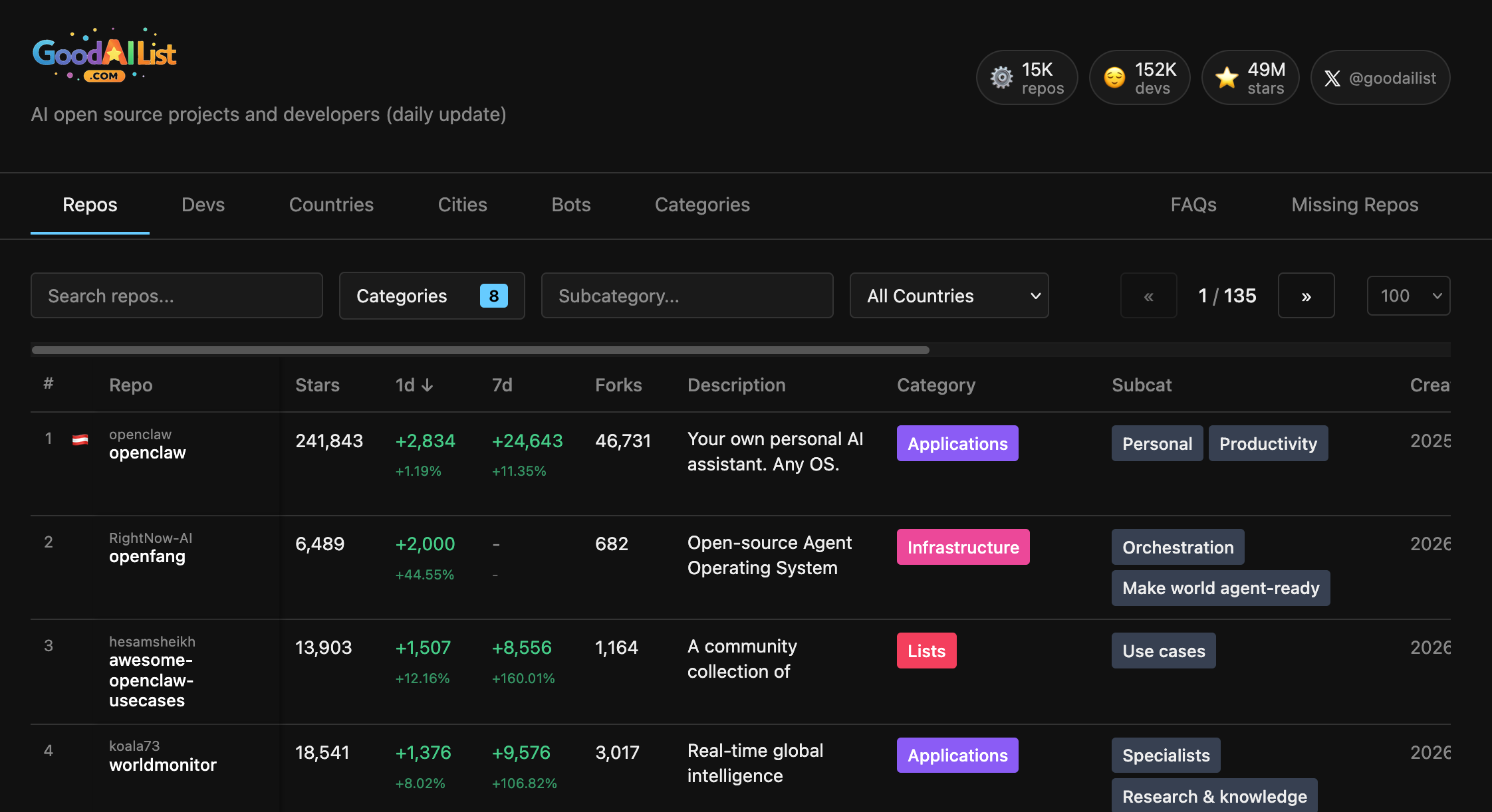
If you’re building ML systems in 2026, Chip Huyen released an actively updated list of the top and fastest growing AI open source projects sorted by category and sub-category, super useful: The Good AI List is updated daily as a leaderboard for tracking what’s trending in open-source AI on GitHub indexing ~15K repos / ~150K developers. I really like how it is possible to find the fastest growing projects with 1-day and 7-day star deltas, which shows right now there’s a massive explosion of accelerated popularity for repos across the board. For production ML practitioners, the practical value is triage and discovery, we can use it to spot fast-moving infra (agent runtimes, sandboxes, orchestration, RAG plumbing), emerging “skills/prompt” ecosystems, and tooling that’s gaining real adoption signals. If you haven’t this is definitely a resource that is worth checking out and bookmarking for reference as well.
Pydantic is dropping a new rust-based Python interpreter specifically built for LLM/Agent execution, this “codemode” space is definitely an interesting area to keep an eye on: Monty is an open-source Python “bytecode” VM written in Rust that’s built with security by design as a sandbox environment. The key idea is “start from nothing, then allowlist capabilities” - it seems that Monty code has no filesystem, network, env var access by default, and the only way it can touch the outside world is via external functions you explicitly expose, which are the tools you’d normally register for tool-calling. This is inspired from Anthropic’s code mode, which allows for an execution environment that allow agents chain commands. It is also interesting that in this case the Python VM is optimized for speed, with sub-millisecond startup times, and low processing costs, together with good old Pydantic type checking. It is quite exciting to see non-cpython based implementations of Python, as this is definitely going to spark quite a lot of innovation in the space.
Sebastian Raschka’s 8th Chapter
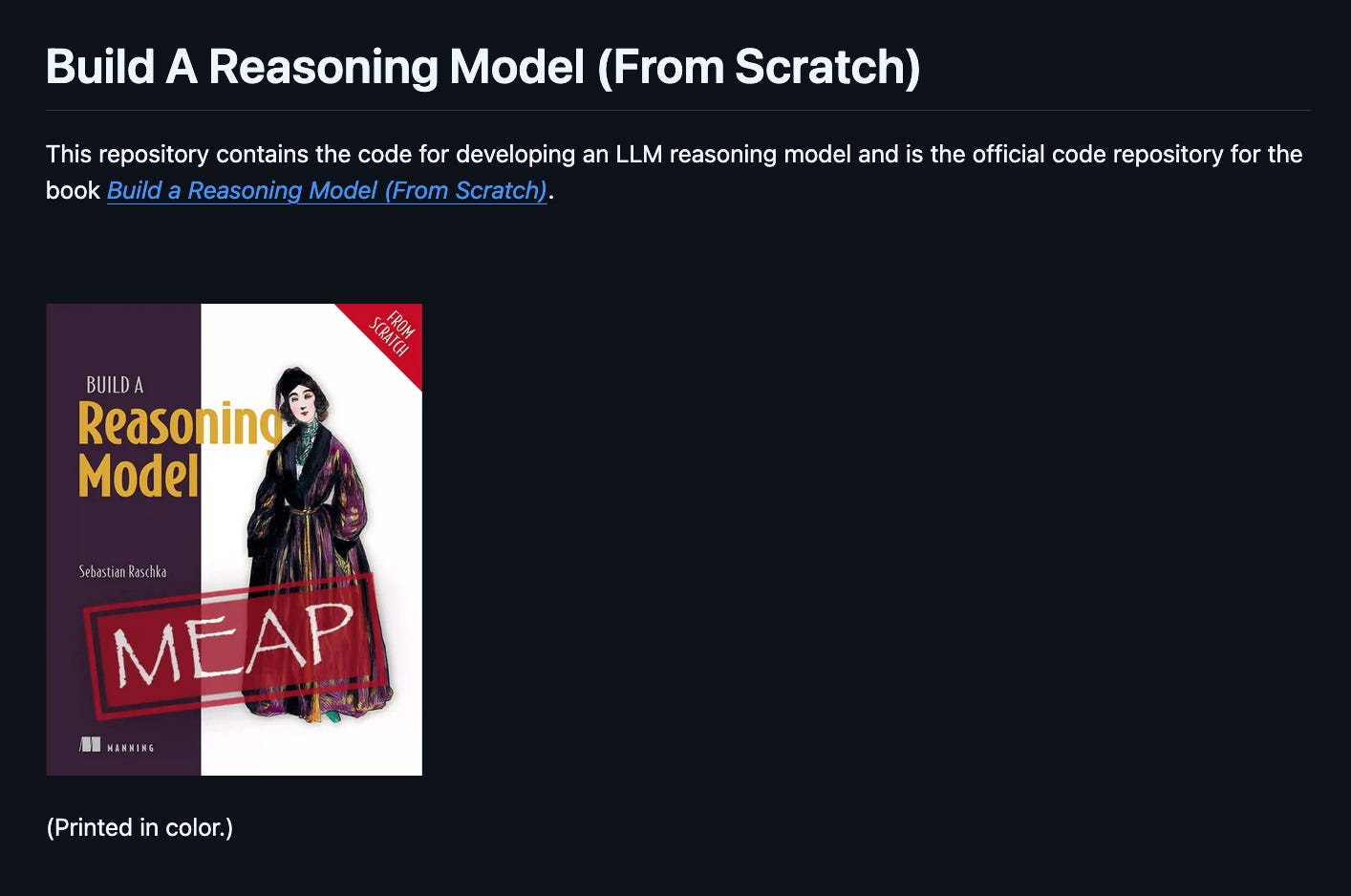
Sebastian Raschka is at it again with his (WIP) Manning book “Build A Reasoning Model”, and is sharing for free the working code and exercises, which are an absolute goldmine: This week he released the 8th “bonus” chapter with a practical data-gen pipeline for knowledge distillation of reasoning models. Basically given a JSON of math problems + ground-truth answers, it generates teacher outputs (both a thinking trace and a final answer) and writes them incrementally to a new JSON dataset you can use to train a smaller reasoning model. This is really interesting as it allows us to turn expensive/slow reasoning into something that we can ship and explore on smaller models with low latency / less costs to get them to perform. Definitely worth checking out.
Upcoming MLOps Events
The MLOps ecosystem continues to grow at break-neck speeds, making it ever harder for us as practitioners to stay up to date with relevant developments. A fantsatic way to keep on-top of relevant resources is through the great community and events that the MLOps and Production ML ecosystem offers. This is the reason why we have started curating a list of upcoming events in the space, which are outlined below.
Events we are speaking at this year:
eTail Europe - March @ Berlin
World Summit AI Europe - September @ Amsterdam
Other relevant events:
KubeCon Europe - March @ Amsterdam
PyData Berlin - April @ Frankfurt
Databricks Summit - June @ San Francisco
World Developer Congress - July @ Berlin
EuroPython 2026 - July @ Prague
EuroSciPy 2026 - July @ Krakow
Code.Talks 2026 - Nov @ Hamburg
MLOps World 2026 - Nov @ Austin
In case you missed our talks, check our recordings below:
The State of AI in 2025 - WeAreDevelopers 2025
Prod Generative AI in 2024 - KubeCon AI Day 2025
The State of AI in 2024 - WeAreDevelopers 2024
Responsible AI Workshop Keynote - NeurIPS 2021
Practical Guide to ML Explainability - PyCon London
ML Monitoring: Outliers, Drift, XAI - PyCon Keynote
Metadata for E2E MLOps - Kubecon NA 2022
ML Performance Evaluation at Scale - KubeCon Eur 2021
Industry Strength LLMs - PyData Global 2022
ML Security Workshop Keynote - NeurIPS 2022
Open Source MLOps Tools
Check out the fast-growing ecosystem of production ML tools & frameworks at the github repository which has reached over 20,000 ⭐ github stars. We are currently looking for more libraries to add - if you know of any that are not listed, please let us know or feel free to add a PR. Here’s a few featured open source libraries that we maintain:
KAOS - K8s Agent Orchestration Service for managing the KAOS in large-scale distributed agentic systems.
Kompute - Blazing fast, lightweight and mobile phone-enabled GPU compute framework optimized for advanced data processing usecases.
Production ML Tools - A curated list of tools to deploy, monitor and optimize machine learning systems at scale.
AI Policy List - A mature list that maps the ecosystem of artificial intelligence guidelines, principles, codes of ethics, standards, regulation and beyond.
Agentic Systems Tools - A new list that aims to map the emerging ecosystem of agentic systems with tools and frameworks for scaling this domain
Please do support some of our open source projects by sharing, contributing or adding a star ⭐
About us
The Institute for Ethical AI & Machine Learning is a European research centre that carries out world-class research into responsible machine learning.